Sunday, June 2, 2019


Babysitting a Shark in a Coldroom

Comoros Encounters

2019

 “Throughout his work we experience an artist who, like a virtuoso, subtly underlays the various encounters depicting the social, political and economic situation in the Comoros with a multi-layered pictorial discourse. He realizes the images as stray migrants of our world of experience – an encounter, a collision of ‘image’ and material ‘reality’, a running together, a meeting between two universes, each influencing the other.” Urs Stahel

Kelvin Haizel. Part of  a 15-piece wall installation "Babysitting a Shark in a Coldroom I" (BASIC I) series. No. 2. Inkjet print mounted on oval-cut Dibond. 38.7x58.4cm. 2018 

Kelvin Haizel. Part of  a 15-piece wall installation "Babysitting a Shark in a Coldroom I" (BASIC I) series. No. 4. Inkjet print mounted on oval-cut Dibond. 38.7x58.4cm. 2018

Kelvin Haizel. Part of  a 15-piece wall installation "Babysitting a Shark in a Coldroom I" (BASIC I) series. No. 12. Inkjet print mounted on oval-cut Dibond. 38.7x58.4cm. 2018

Kelvin Haizel. "Babysitting a Shark in a Coldroom II" (BASIC II) series. No. 2. Inkjet print mounted on Dibond.
92.6 x 139.7cm. 2018

Kelvin Haizel. "Babysitting a Shark in a Coldroom II" (BASIC II) series. No. 5. Inkjet print mounted on Dibond. 
92.6 x 139.7cm. 2018

Kelvin Haizel. "Babysitting a Shark in a Coldroom II" (BASIC II) series. No. 6. Inkjet print mounted on Dibond. 
92.6 x 139.7cm. 2018

 You may follow the following links to view the different reviews and perspectives shared by different publishers.


https://www.monopol-magazin.de/barrieren-und-blutiger-ernst
https://www.nzz.ch/feuilleton/afrikanische-kunst-kelvin-haizel-gewinnt-vontobel-preis-ld.1466675
https://www.contemporaryand.com/de/exhibition/kelvin-haizel-babysitting-a-shark-in-a-coldroom-comoros-encounters/
https://www.vontobel.com/en-ch/about-vontobel/impact/vernissage-for-a-new-gaze-2-on-aspirations-in-blue-white-and-red/
https://ursstahel.ch/kelvin-haizel-babysitting-a-shark-in-a-cold-room
https://www.artlog.net/en/kunstbulletin-4-2019/kelvin-haizel
https://www.fotointern.ch/archiv/2019/03/08/vontobel-foerderpreis-a-new-gaze-2-geht-an-kelvin-haizel/

Sunday, July 8, 2018


On Identity: African Artists and the Diaspora
  
Full Interview with C& for the  Print Issue #9: Round Table
on 'Identity'

Kelvin Haizel, things and nothings, 2017. Installation view at the 11th Bamako Biennial. Courtesy the artist and Dawit Petros


C& - In your work you examine extensively the condition of the image today. By doing so you also engage with your local environment in Accra. How important is that local/national perspective to you and your work? 

Kelvin Haizel: The image in our contemporaneity has become a very complex and coded entity that does not only exist to index things, but has brought about a series of real objects in the material world. Indeed, images, in many ways have become objects in and of themselves. Consequently, the image has become ‘matter’ that is not to be perceived only with visual apparatuses and faculties, but a wide range of sensibilities are needed with which to engage the image. Even new vocabularies have to be developed to articulate what it is that we refer to as ‘image’ in this time. If, per Hito Steyerl, the image has literally crawled of screens, canvases, walls, billboards, etc. and has materialized as a part of our reality, then it is equally plausible to say that the ‘image’ also becomes some[thing] we may bump into, when backing up to see the expanse of a blank wall. The image-become-object may even pass through us because it assumes imperceptible multiplicities of material being. One can imagine, with the advent of 3D food printers, for example, it is even conceivable that the image becomes what can be eating and digested to become nutrients running through our bodies, only to become excreted and so on. The object that an image becomes in our literal space then, is what has held prominence on my radar of interest for some time now.

 Let us pause for a second and imagine cutting and pasting any food from around the world advertised on the internet, editing it in Photoshop and printing it for lunch! In the process, we no longer edit only visual temperature, but temperatures of the image that can literally burn and bruise your tongue or give us novel culinary experiences. And if the object of such an image enters our physical space, containing the Barthesian Punctum, which exist only to prick or wound a viewer’s faculties of perception, then it is even imperative to begin arming ourselves against the threat(s) of what we cannot even anticipate. For the Punctum in actuality, lays outside the ambit of our control. Imagine entering a gallery and coming out without one eye because you encountered the Punctum of an image-become-object! May we not now need new kinds of paramedics on standby at museums and gallery openings, equipped with new means of rescuing us from the various havocs that will constantly be wrecked on us by these new forms of active, if not activated images? Exhibition announcement may have to be accompanied with disclaimers in case of any possible injuries. Artists and gallerists may now more than ever have to employ special image security, to prevent their images from running out before the opening. It is an exciting world to anticipate.

These potentialities go to indicate that our environments, whether they are local or global, are already plagued with images as objects, some of which are inherently vicious, causing small pockets of ruptures to the norms of our physical realities. If we are to consider localities in such potentially globalized terms, then anyone’s locality should be important. We, however, have to be careful not to play into that type of “National perspective” that could be smuggling in fascist tendencies via the backdoor. We are acutely aware of the rise of the Right all over the world, and we have to be vigilant against its cancerous spread even further.

By the fact of vesting interest in a subject or object as complex as the image, it is implicit that my practice engages ideas and concepts that are at once local and global. This is the reality we all currently share. Although the image is admittedly policed differently in diverse geographies, we all participate in several geopolitical sites at one and the same time, by the fact of our contemporaneity. Accessibility is constantly policed. Therefore what might be possible to escape through a screen in Slovenia via let’s say, YouTube, might read “this video is not available in your region” in Ghana. Who is this that is preventing my accessing of our commons? Whoever it is, censorship and access blocking only occasions inventiveness. Thus instead of waiting for the image to reach my region in due course, I just cast a net over my screen and go on the road in search of the wounds caused by those that have already crossed over. Hoping to return with a bumper harvest, from which I can remix in postproduction, all that I have gleaned. I straddle both virtual and actual worlds and this perhaps, is what brings me to some of the ruptures caused by the image-objects as accidents along the long road between Accra and Kumasi, which I captured in the series “desperately seeking forevers” and exhibited as part of my multi-format installation “things and nothings”. It is a play of the local and the global in complex ways.


C&: Why do you think "identity" (in the broad sense of the word) is a recurring topic with artists from Africa and the Diaspora across generations? 
KH: To begin with, I will not necessarily say that it is any real “recurring topic” in the sense that the artists simply enter their studios and say to themselves, “I’m going to produce work about identity”. No. I don’t think this is the situation. Sometimes it is those reading the work who wish to see “identity” in the work of such artists. I am wondering if anyone ever considers that this very notion of “identity” is also at play in Koons or Hirst, with all the furor that the latter’s Venice Biennale work sparked. But for me, identity is a much complex thing and can open up to various possibilities of engagement. Nonetheless, I tend to believe, the question points to the overburdened subject every artist from the global south has had to grapple with in the last thirty, if not more years. It is as if all artists that fall within your above-named category must define and defend their artistic interventions based on a certain rootedness. I hold contrary views to this.
                             I am wondering if anyone ever considers that this very notion of  “identity” is also at play in Koons or Hirst, with all the furor that the latter’s Venice Biennale work sparked.
I guess, to an extent the limits were defined during and after the ruptures in geopolitics that occasioned the multicultural turn in art. One of the pivotal events in an art historical context that instigated the canker of the ‘orient’ needing to re-address issues of identity was William Rubin’s “Primitivism” in 20th Century art: Affinity of the Tribal and the Modern” in 1984. In a bid to correct or revise the faulty premise of this show, Jean-Hubert Martin also curated the infamous “Magiciens de la Terre” exhibition in 1989, which further perpetrated the primitivist notion, where ‘identity’ was tied to the DNA of artists selected from Africa and the rest of the global south. With the benefit of hindsight, we see that by the multicultural turn of the late 80s and 90s, artists in the so-called African Diaspora, who, needing to assert their equality, did so partly through routing their interventions via the same identity DNA engineered by those ‘inventive’ curatorial mishaps. And those on the African continent also erroneously believed they had to refer their subject matter to some ‘originary’ notions in order to participate in the ‘global’ conversation. In other words, African artists too among other artists in the so-called “third world”, felt an urge to assert and defend their ‘exoticized othernesses’ in order to be given an opportunity to participate. This is how the subject of ‘identity’ has become the default trope, if we may, of artists from Africa and the Diaspora.
The problem is not so much about having to deal with identity in general terms, but it is identity that is shrouded in the domain of the ‘Ethical Regime’ as per Rancière. This remains within the realm of the cultural. Political identity, however, which is produced as a consequence of neoliberal economic policies and biopolitics, where expendable life is part of the normal functioning of the system, is often left untouched in this atavistic DNA. To effect any real change in the realm of atavistic identity, it is imperative to interrogate the truly political. The entire discourse of identity will have to be problematized to such an extent that we can no longer identify what it is in the way that it was known. But this has yet to seep through as did the previously engineered identity DNA.
This canker is not only propagated through the given media and formats of artistic production, but also functions through ethnographically oriented curatorial interests, that tend to drive exhibition production, when art from Africa comes into the picture. This is hugely unfortunate. One only need to look at calls for Art Prizes intended for Africa; or criteria for residency calls for African artists, or texts on the subject of African Art. Even discussions of Contemporary African Art tend to be framed in ethnographic contexts. We are yet to access any real critical texts on African artists that departs significantly from the atavistic.
I find this ‘identity’ subject quite dreary, if it is to be continually seen in uncritical terms, given that almost every artist and even non-artists deal with an iteration of this identity in one way or another. It is imperative for Artists, curators, exhibition makers, writers, interested in exploring identity, to do so in much nuanced ways.

Kelvin Haizel, things and nothings, 2017. Installation detail at the 11th Bamako Biennial. Courtesy the artist and Dawit Petros

C&: How would you refer to your practice when exploring subjects related to your culture or identity? How is it relevant to speak about it in these terms? 

KH: In 2014, blaxTARLINES KUMASI, Project Space for Contemporary Art, an artist collective that operates as an incubator of artistic ideas and activities from the College of Art and Built Environment in the Kwame Nkrumah University of Science and Technology, Kumasi, organized the first in a series of end-of-year exhibitions for the BFA Painting and Sculpture graduating class. This exhibition was titled: “The Gown Must Go to Town”, based on Dr. Kwame Nkrumah’s famous speech, “The African Genius”, made at the launch of the Institute of African Studies, University of Ghana, Legon in 1963. The import of his point, was for academia, symbolized by the ‘academic gown’ to allow its influence to affect spaces outside the boundaries of the university, whereas allowing the environment to also seep through the gown, in a spirit of reciprocity. Subsequent exhibitions organized by blaxTARLINES KUMASI, have continued to champion these ideas.

This is the sort of premise that informs my engagement within the socio-cultural and most importantly political landscape from where I create. Furthermore, as iterated in response to your first question, images have crossed from the screen into our reality and become objects in our daily experience. They come to us from almost every geographical location possible, therefore the environment I talk of is already at once local and global in every sense. For example, when Toyota recalled some 6000 of its Camrys, Siennas, Highlanders etc. for the faulty vacuum assembly in their breaking mechanism, a number of the cars were already running our roads in Ghana. As to if Toyota cared to really recall those that were already operational in Ghana is another story altogether, and this probable negligence, may have also contributed partly to the record high of 20,444 cases of vehicular accidents on our roads in Ghana in that period, majority of which fell within Accra and Kumasi region.

In this sense, the errors of such a giant multinational company, participates in cumulative deaths in my local context, affecting the texture, literally of the social and cultural landscape. If in this instance, our local ports function as screens, then they failed to identify the faulty images, or low resolution vehicles, failing then to prevent them from crossing over onto our roads. My participation in this then, is to critique these neoliberal lapses and invite the wreckages via image-become-objects, into my work.


Kelvin Haizel, things and nothings, 2017. Installation view at the 11th Bamako Biennial. Courtesy the artist and Dawit Petros


C&: When artists from Africa and Diaspora explore themes beyond their "identity", a conceptual artist from Accra is focussing on Bauhaus for example, they are often questioned in the way white artists aren't. How do you think this can be challenged?

KH: I think it rather reflects very poorly on anyone who, especially in this Century, finds a problem with an artist exploring ideas beyond the problematic prescribed context of “identity”. In fact it should be laughable that anyone would expect any artist to uncritically work with “identity” the world over. Having studied at the Department of Painting and Sculpture in Kwame Nkrumah University of Science and Technology, my practice is premised on starting with the void. What does this mean? My practice and that of many of my colleagues, does not privilege any particular medium, form or material. In the same way, no singular genre is held in high esteem over another. All the histories are tested so that maybe we will be able to invent practices for futures ahead of us. With such a potentially democratic space and spirit, it behoves on me to conceive possibilities anew. I therefore, have to also be responsible to the sustainability of my practice as well as those of the larger community.  In fact one of the exciting young artists who is also operating from our Kumasi community is Tracy Thompson, who experiments with polymers by dissolving polystyrene in gasoline and testing the resulting molten viscous mass against gravity, creating perplexing forms that resemble geological formations, or delicate crystalline simulations. Who reserves the right to tell her she cannot because she is African?

Kelvin Haizel, things and nothings, 2017. Installation detail at the 11th Bamako Biennial. Courtesy the artist and Dawit Petros

You may also follow the link below to see the extracts published on C& webpage. 


Thursday, March 1, 2018

"things and nothings" at Afrotopia, 11th edition Rencontres de Bamako Biennale Africaine de la Photographie.


Kelvin Haizel


things and nothings, 2017

In things and notings, Kelvin Haizel explores the question of the image as object. His installation consists of  recycled car and motorbike parts (doors, headlamps,indicator lights ...), a video displayed on an upward-facing screen, and a video projection. The doors and headlamps are covered in adhesive sheet printed with images of car accidents. The various lamps are illuminated, wired together like a garland traversing the exhibition space, while the blink and tick fill the space in which the two videos are shown without sound. The first presents a grid of multiple images of gloved hands moving now quickly, now slowly, over a board game. The second is a film in slow motion. The installation as a whole plays on the oscillation between object and image, seeking, in underlining the objective nature of the image, to undermine its authority: slowed -down, the film is decomposed into independent images, while backlit images are headlamps...Photographs and videos are freed of their subjection to the subject or of their utility as pictorial supports, to take on an immanent function.  
Cedric Aurelle, the author of the artists' notes.
Afrotopia,
11th edition Rencontres de Bamako 
Biennale Africaine de la Photographie.

Kelvin Haizel "things and nothings"  at Afrotopia,  11th edition Rencontres de Bamako   Biennale Africaine de la Photographie. 2017. Photo Courtesy Dawit Petros and Kelvin Haizel

Kelvin Haizel "things and nothings"  at Afrotopia,  11th edition Rencontres de Bamako   Biennale Africaine de la Photographie. 2017. Photo: Dawit Petros and Kelvin Haizel

Kelvin Haizel "things and nothings"  at Afrotopia,  11th edition Rencontres de Bamako   Biennale Africaine de la Photographie. 2017. Photo: Dawit Petros and Kelvin Haizel

Kelvin Haizel "things and nothings"  at Afrotopia,  11th edition Rencontres de Bamako   Biennale Africaine de la Photographie. 2017. Photo: Dawit Petros and Kelvin Haizel

Kelvin Haizel "things and nothings"  at Afrotopia,  11th edition Rencontres de Bamako   Biennale Africaine de la Photographie. 2017. Photo: Dawit Petros and Kelvin Haizel

Kelvin Haizel "things and nothings"  at Afrotopia,  11th edition Rencontres de Bamako   Biennale Africaine de la Photographie. 2017. Photo Courtesy Dawit Petros and Kelvin Haizel

Kelvin Haizel "things and nothings"  at Afrotopia,  11th edition Rencontres de Bamako   Biennale Africaine de la Photographie. 2017. Photo: Dawit Petros and Kelvin Haizel

Kelvin Haizel "things and nothings"  at Afrotopia,  11th edition Rencontres de Bamako   Biennale Africaine de la Photographie. 2017. Photo: Dawit Petros and Kelvin Haizel

Kelvin Haizel "things and nothings"  at Afrotopia,  11th edition Rencontres de Bamako   Biennale Africaine de la Photographie. 2017. Photo: Dawit Petros and Kelvin Haizel

Wednesday, December 27, 2017


Lagos Biennial: Introducing yet Another platform for Visibility…


Kelvin Haizel "Yaw Crossing Liar". Lagos. 2017. Image courtesy Kelvin Haizel. 


The maiden Lagos Biennial with the theme: “Living on the Edge” is one more biennial on the African continent. And another in the world of biennials. Lagos Biennial provides artists another opportunity to exhibit, and consequently stay visible or become visible, if they are emergent. This is what brought 41 artists from all over the world (Cuba, Ghana, Germany, South Korea and more), to show their work in Lagos, Nigeria from 12th October to 22nd November 2017.

In this world-wide game of visibility, an artist who does not exhibit does not exist and therefore risks invisibility. It is therefore a welcome gesture to have Folakunle Oshun and his dedicated team, initiate this audacious project. Even more importantly, as an artist-initiated and run biennial, the Lagos Biennial joins the likes of artist-run biennials such as the London Biennial, founded in 1998 by the conceptual artist David Medalla, the Dallas Biennial, established by Dallas-based artists Michael Mazurek and Jesse Morgan Barnett, the Kochi-Muziris Biennial founded in 2012 by the Kochi-Muziris  Biennial Foundation with Bose Krishnamachari and Riyas Komu as artistic director and curator respectively, among others. Since its inception, the Kochi-Muziris Biennial has been curated by artists. Also curated by artists, the Lagos Biennial exemplifies an evolving trend of artists assuming the role of curator and charting a discourse of contested power relations between artists and ‘professional’curators, to wit. We can cite a few more examples: the 2017 Istanbul Biennial curated by Scandinavian artist duo Elmgreen & Dragset and the 2016 edition of the Shangai Biennale which was curated by the Raqs Media Collective.

In Rancièran thought, political activity emerges when whatever had no business being seen in the normalized order of things, is, by means of antagonism, what he terms as “dissensus”, made visible. [i] It is safe then to say that the intended outcome of  artistic interventions, albeit within the field of curating, so long as it is motivated by political action, is to affect visibility or some sort of attention. What is the Lagos Biennial’s relationship to this politics of visibility? What does it mean in the face of purported in-visibility, if there are not many avenues or means by which practitioners will want to gain visibility? These questions may not be answered in this current take, but they can provide some amount of food for thought.

For an international event like the maiden edition of the Lagos Biennial which is heavily underfunded (if any real funding even came at all), the most important reason to organize it would be to offer yet another platform; another “alternative space” that should eventually provide visibility to artists. Here, they (the artists and organizers) can exercise their politics, engender debates and arouse scathing critique where necessary. It potentially creates an avenue for possible disruption of systems in place (if there even are any such systems in the very first place). The type of systems I refer to will be what Rancière calls the ‘police’; that which authorizes what becomes sensible; perceivable via the sensory faculties of human. Most people would like to equivocate the sensible in Rancièrean terms, with the visible. Sensibility in this regard according to the Rancièrean scheme, is much more complex.

Traditionally or in the ‘Ethical Regime’, large-scale exhibitions are organized by institutions with heavy budgets, and often led by a ‘significant’ curator. The curator would develop a curatorial interest and select artists/participants whose work often revolve around the curatorial imperative or direction. In this vein, a certain power dynamic is established amongst the parties involved: the institution, the curator, and the artist/participants. In this dynamic, the institution silently wields power so far as it is the source of funding or has the means of bank-rolling the event, the curator is revered as an arbiter of meaning and therefore indispensable in this relation (sometimes the task of sourcing for funding also falls within the gamut of the curator), the artist/participant, quite like the artworks, is usually one among the many who can be easily validated or disposed of, should any crisis be imminent. There seems to be an infinite pool of ‘a reserve army’ of artists at the beck and call of curators.  Thus, the visibility gained by artists through such exhibitions is often that which is already sanctioned by the ‘police order’. An attempt to challenge this status quo is what grants credence to the intent of such platforms as the Lagos Biennial. But since it is only in its founding year yet, this has to stand the test of time. Sustainability is crucial if Lagos Biennial will become significantly viable in the world of so many biennials. And this sustainability would have to remain hinged onto the initial stance of nurturing patronage and support locally.

The Lagos Biennial by being one that is initiated, run and curated by artists, joins that rare crop of large-scale exhibitions that challenge the traditional order to several extents. One only need look further down the West-African coast to Ghana and study the efforts of blaxTARLINES KUMASI (Project Space for Contemporary Art in the Department of Painting and Sculpture, Kwame Nkrumah University of Science and Technology)[ii]. It is through experience gained from having been involved in the communally driven strategies of blaxTARLINES KUMASI, that my colleague Kwasi Ohene-Ayeh and I took the honour to contribute our quota to the Lagos Biennial as guest curators. When artists organize, fund and curate their own exhibitions, its intent is to cause a disruption in the normal order. As a result, another kind of visibility may be created. The publics and sensibilities that are activated pose new challenges and the type of complacency that the Ethical Regime produces is shattered. In this sense, there is real potential for transformation to be effected. But to really assess the verve of this biennial, we would have to bid time; allow it to grow, ensure its sustainability and make it work beyond the initial edition or subsequent two or three. How do we ensure this? Following from the professed interest of the biennial to “highlight the problems of the marginalized… and to critique socio-political climate… that produces the prevailing rich and poor dichotomy”, as per the Artistic Director, Folakunle Oshun, we need to at least look at some of the decisions that undergirded the exhibition. How did this desire to “critique the socio-political climate” for instance, translate into the various curatorial choices in terms of artist selection, funding raising, exhibition siting, design, construction and programming that goes beyond only the display of objects or the staging of performance? (Here, I refer to talks which were hosted at the CCA, Lagos and also the physical site of the biennial at the Running shed at Ebute Metta on the Lagos Mainland).

As we pat ourselves on the back[iii] for having gone against all odds (a claim similar to that of the very first Kochi-Muziris Biennale[iv]), to realize an exhibition of this magnitude, on the very leanest of budgets and artists’ collectivism, let’s ask ourselves whether or not our efforts have been enough. How far can we say that we have achieved the undergirding premises of the biennial? What quality of intervention did it bring about as compared to what it hoped for? What sort of visibility would be born out of this ‘showing’? Would it be new visibility for the participating artists or rather the making visible of the erstwhile invisible ‘squatters’ who had till now, occupied the shed and its disused train coaches?

Listening to voices on the neighbouring streets to the major exhibition site, we get a variegated sense of what the people who really spend their moments “living on the edge” think. There is both excitement and apprehension. When Youngjoo Yoo, one of the participating artists, went around some Lagos locations to ask; “Who is living on the edge”? She ended up with these responses among others in her project ‘Sincerely,’[v]:

*Solomon: running his own business in V.I.(Victoria Island).
"They are the people who live in the area of Ajegunle or Mushin. Those are the places of criminality and very dangerous. Nobody goes out after 7 PM. Anybody in Lagos doesn't want to live there."

*Laide: Art cafe waitress.
"Because Lagos is surrounded by water, people living on the edge are people living by the sea. There are many places like that in Lagos, such as V.I.(Victoria Island), Ikoyi, Apapa, Ilaje, Epe, Lekki, Ilora Badia, Ajegunle"
"Do you want to live on the edge?"
"No, I'm scared of water."

*Tope: working in Lekki.
"I need to go to work in Lekki. I know that the traffic isn't like this during the weekend. But when a big man is having a party he invites a lot of other big men. Because of that the traffic is like this. When poor people are having a party it isn't like this. This thing makes me feel like I’m living on the edge."

* A resident of Ajegunle: she didn't want to be photographed and didn't want to give her name either so I (Youngjoo Yoo) took a picture of where we had talked instead.
"Anybody, everybody. Because heaven is up there and down here is hell."

*Destiny Hundeym: Born and living in Badagry
"Are you living on the edge?"
"Yes, I am, not the end of the edge but the beginning of the edge."

I am particularly interested in Yoo’s project because the responses give physical geography to the theme under that the biennial sought to engage. It grounds the conditions of the so called “edge” within affluence and dearth, exemplified by the paradoxes of living in Ikoyi or Ajegunle, for example, or travel between Lekki and Mushin. While we enjoyed the pre and post-opening parties at a plush address at the beautiful waterfront in Ikoyi in the evenings, we gathered by day at the Running shed at Ebute Metta to respond to the conditions of “those pushed to the brink of social and economic existence”. These are the paradoxes that make life on the edge as real a concern of interrogation and participation. We are in it. And it is probably from within it that we may disrupt it.

If the main aim of the maiden Lagos Biennial was to “highlight the stories of individuals, groups, and communities in the society who are marginalized from the centre” as per Folakunle Oshun (Artistic Director), in an interview with founder and director of CCA Lagos Bisi Silva[vi], then perhaps we can admit that the situation has been “highlighted”. What remains is this potential that has been unleashed. What becomes of the venue after the exhibition closes on 22nd November 2017? What becomes of the squatters who used to live there on edge and had to be displaced? How certain are we of the biennial’s return to Ebute Metta in subsequent editions? If we go by the idea that art strives to present another type of visibility, then we have to laud the efforts of the biennial, its organizers, participants and allied institutions for activating the possibility for having initiated the birth of another global community.


Kelvin Haizel is an artist living and working in Accra and Kumasi, Ghana.

Notes


[i]  In the text Jacques Rancière writes: “Political activity is whatever shifts a body from the place assigned to it or changes a place's destination. It makes visible what had no business being seen, and makes heard a discourse where once there was only place for noise; it makes understood as discourse what was once only heard as noise.”
Ranciere, J. (1999). Dis-agreement: Politics and Phylosophy. (J. Rose, Trans.) Minneapolis: University of Minnesota Press.

[ii] blaxTARLINES KUMASI, is a collective of practitioners founded by karî’kạchä seid’ou, George (Buma) Ampratwum and Kweku Boafo Kissiedu (Castro). blaxTARLINES KUMASI is duly supported by Dr. Edwin Bodjawah (Dean of the Faculty of Art) and all the staff of the Department of Painting and Sculpture. It is described as “the Project Space for Contemporary Art in the Department of Painting and Sculpture, Kwame Nkrumah University of Science and Technology”, and has been known to have organize, amongst many projects, ambitious, large-scale art exhibitions, the most recent of which has been Orderly Disorderly (2017). The first of these exhibitions was Silence between the Lines (2015), which was an experimental exhibition of emergent art held in Kumasi in February, 2015. The subsequent ones being: The GOWN must go to TOWN (2015) and Cornfields in Accra (2016). Some common features of this body of exhibitions are intergenerational conversations, collective curating, accessibility programming, especially, braille translations of exhibition texts and open-source coordination, and off-site projects. These exhibitions have all been organized on a shoe-string or even zero budgets. Commitment and perseverance has always prevailed and this has sustained all activities that blaxTARLINES KUMASI has embarked on.

[iii] See Obidike Okafor’s article “The Biennial that Lives on the Edge”, for Contemporaryand.com. http://www.contemporaryand.com/magazines/the-biennale-that-lives-on-the-edge/ 
[iv] The maiden edition of the Kochi-Muziris Biennale was also so fraught with myriad challenges that the publication that accompanied the mega exhibition was appropriately titled: “Against All Odds”. Edited by Sabin Iqbal, the book narrated the pain and grief taken by the organizers to bring the show to fruition. Since its inception in 2012, the biennial has sustained its decision to always give the curatorial task to an artist. The Kochi-Muziris Biennale enters its fourth edition in 2018 with a participating it the very first edition, Anita Dube, as the curator this time round.
[vi] When Bisi Silva asked; “What is the curatorial premise?” Folakunle Oshun, the Artistic Director of the newly established Biennial responded, “The first edition of the Lagos Biennial hopes to highlight the stories of individuals, groups, and communities in the society who are marginalized from the center. This type of engaged intervention - critiquing the socio-political climate from outside in, is essential in a city like Lagos where the dichotomy of rich and poor prevails. Themed “Living on the Edge” the biennial seeks to explore the experiences of artists living in and around crisis situations across the world.” See biennial catalogue, conversation between Folakunle Oshun and Bisi Silva titled “Lagos: The Making of an African Capital of Culture”.

Sunday, October 22, 2017

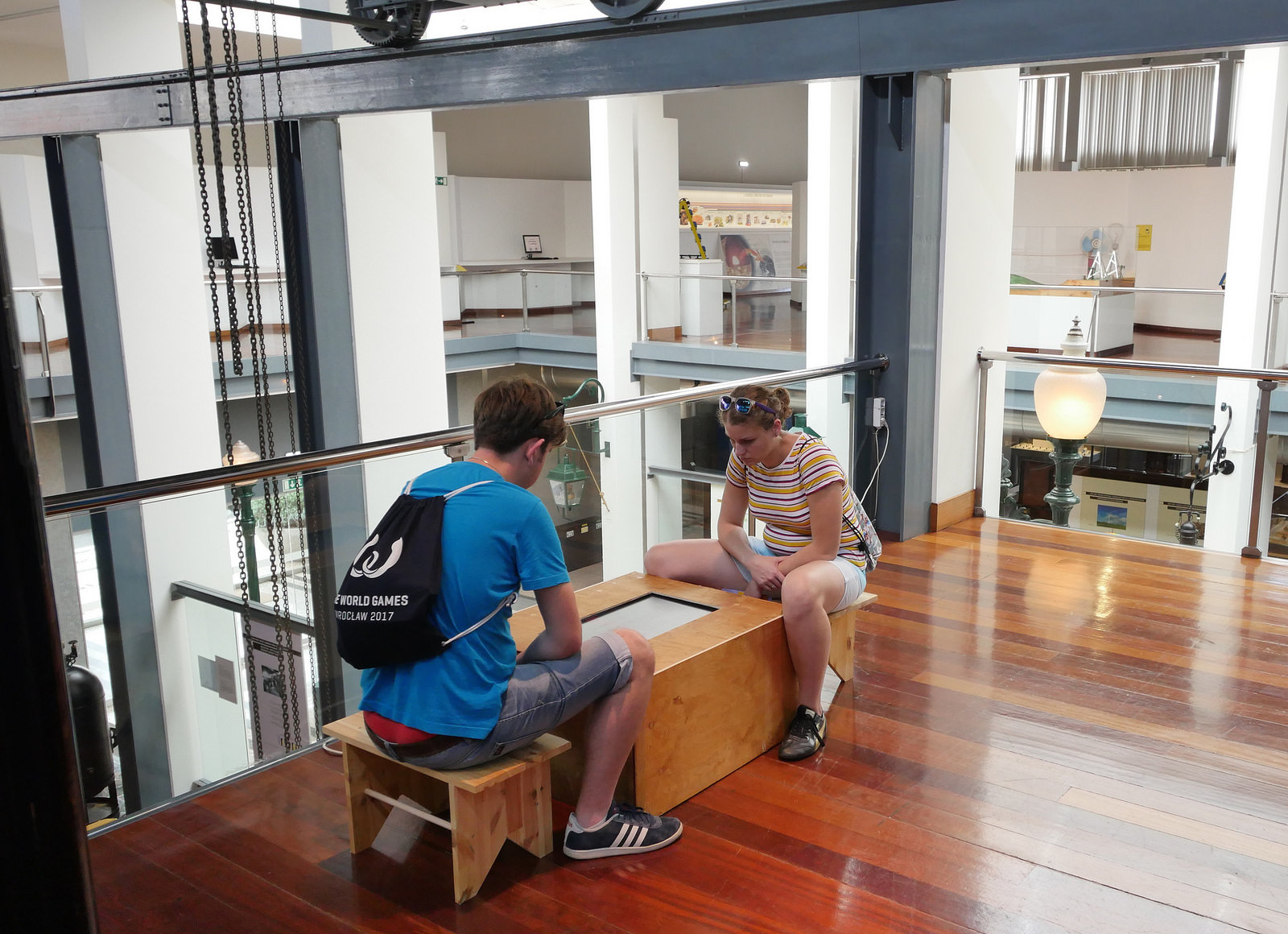
How Sweet are You!


"Don't Worry, I'll wait!"
Part of a group show:
Bizindalo!
Art & Technology in Africa
September 2 - October 10, 2017
at 
Museu de Electricidade | Casa da Luz


Tuesday, May 23, 2017


'things and nothings' 

Art Exhibition 
by
Kelvin Haizel

9. 5.17 - 27. 5. 17

Old KNUST Museum 


“Things and Nothings” is a result of investigations into the image (still and moving). A thing is considered a thing because it has yet to enter any form of categorization outside of being a thing; it has yet to be classified. However, nothing is already classified among the sub (-stitute) (-altern) (-standard) it may be considered as inferior, derogatory and or lowly within a certain hierarchy of objects. In another breath the image as nothing may be thought of as not-special, banal or even mundane. In the world saturated with all sorts of images, we could experience them in their material form as objects that are things or nothings. How do the transitions from images to objects occur?  What is the object of an image? How can we tell things from nothings? Using a body of work produced over the past two years, I present the image (in both still and moving form) and the objects they become. 


images from the exhibition, courtesy the artist and Leonphotos.


b.1987. Kelvin Haizel investigates the contemporary condition of the image, in photographic and video form, and its manifestations as objects. He lives and works in Ghana.


kindly visit  https://iubeezy.wordpress.com/2017/05/23/notes-on-haizels-things-and-nothings/. for a review on the exhibition by IUB.


Archive of Experiences(2022)

Solo Exhibition at the MARKK Museum, Hamburg on occasion of the 8 th Hamburg Photography Triennial. This project reimagines an archival albu...